Friday, January 24, 2014

CAREER PATHWAYS


Look at that grey hair


Most know that I have been a massage therapist and educator for over 30 years. Over that time my career has evolved just as I hope those reading this are experiencing.  I actually started out my career as self-taught since there were no massage schools around me. I searched for additional training and took the courses I could find with each one adding to my skills. I have always been busy as a massage professional so the very best learning experience –working with lots of clients has been the most important aspect of my professional development.  In the beginning (back in the day at the end of the 1970’s) it was a different culture for massage practice. I also know those days of professional development for massage therapist are over and a new generation is looking for their pathway for career advancement.
 

Just beginning 


What I hope to outline in this blog is what is available right now and potentially in the near future for career advancement.  Until very recently there was no real clear structure for professional development but things are changing.


 I actually wrote the first edition of Fundamentals of Therapeutic Massage (1990 ish) before I had a bachelor’s degree. Then I realized that I would not be able to teach from my own book at a community college unless I had an academic degree. I could have gotten an associate’s degree but instead completed a bachelor’s degree in Health Sciences from Central Michigan University (1998).  One of the reasons I choose this school was that it awarded credit for prior learning experience. I had to make a career portfolio ( big big job) and then it was evaluated for college level learning.  I received 30 credits in electives toward the degree. After completing my bachelor’s degree, I soon realized that it would take a master’s degree to really secure my credentials as a leader in my field of massage therapy.  I completed a Master’s degree in organizational management and leadership (2001) using blended learning (online and classroom). This educational journey has been expensive, time consuming, frustrating and absolutely
WORTH IT.  One of my professional goals has been to make this process more streamlined and cost effective for others. Here is a general outline of a pathway available for massage therapists now.


STEP ONE

Entry level education.

 
While this foundational education remains in flux, I truly see consensus on the horizon. The job task analysis for the licensing exams ( both from the Federation of State Massage Boards and the National Certification Board for Therapeutic Massage and Bodywork), the core competencies from the Commission on Massage Training Accreditation, the Massage Therapy Body of Knowledge and the analysis by the Alliance for Massage Therapy Education, and the most recent Entry Level Analysis Project indicate strong agreement on what should be included in the foundational training for massage therapy. Whew----------.


I suspect that the content and clock hour requirements will fall into the certificate/diploma level educational structure found in many health professions vocational training.


This is good.  I am supportive of diploma level education defined as taking a year or less to complete the education and vocationally licensed.


An entire career in massage therapy can develop from this beginning platform without any additional certification or academic degrees involved.


HOWEVER----IT IS IMPORTANT TO DOCUMENT CAREER ADVANCEMENT AND EXPERIENCE.


STEP 2


Board Certification

 
Continuing education can cumulate along with work experience to meet eligibility requirement for the next professional achievement- BOARD CERTIFICATION provided by the National Certification Board for Therapeutic Massage and Bodywork.  This generalized but advanced credential indicates that a massage professional has voluntarily committed to documentation of massage education and experience beyond entry level. From this launch point specialty certifications can be created in the future.  I believe finally the National Certification Board has got it right. Certification should be voluntary and beyond entry level. Whew--------------. http://www.ncbtmb.org/board-certification/board-certification


This can be an end point for a career pathway for the massage therapist. But there can be more. Academic degrees.


STEP THREE


Academic degrees.

 
Why would you want an academic degree?  I can think of lots of reasons such as additional validation for professional development, addition of skills over and above massage application including business and leadership, and maybe most important to me- teacher development.  I think we can agree that the massage educators need access to advanced training in the form of associate’s and bachelor’s degrees. AND IT IS AVAILABLE –WOW--------.


Associate’s Degrees


An associate’s degree is typically based on 2 years of college level study

(60 credits).  Some community colleges and technical schools offer a diploma level massage training that can be advanced to an associate’s degree by adding general education courses and other massage related courses. This is really good and becomes a launch pad for the next step--- a bachelor’s degree.


Some community colleges will evaluate prior learning and award credit for the previous massage education and then develop a completion plan for an associate’s degree in general studies or more specifically in a health professions category. I have found associate’s degrees in health and fitness that I thought would be a great fit.


Another option is to find an associate’s degree program that compliments massage diploma education.  Examples include health sciences, general psychology, health and wellness, business, etc.


Yet another option is to complete general education courses at a local community college.


Courses taken to meet general education requirements provide for the following essential outcomes to insure that students are prepared for academic and professional success and for participation as citizens of their communities and the world. Typically the follow categories are used to determine general education.


Critical Thinking

Courses should require and students should demonstrate a range of abilities from tangible problem-solving to higher order processes of analysis, inference, reasoning, synthesis, and judgment. Students should evaluate information, analyze claims and arguments in their own and others’ work, consider multiple perspectives, apply knowledge in new contexts, understand processes of reasoning in various disciplines, and should regularly reflect on their own learning.


Global Awareness

Courses should require and students should demonstrate an understanding of the diversity of culture, race, ethnicity, nations, religions, and political and social systems. This includes an understanding of these concepts themselves and an understanding of their roles in forming identities and values—our own and those of others. Students should be able to identify and explain the influence of historical and cultural factors on past and current events.


Citizenship

Courses should require and students should demonstrate personal and social responsibility through collaboration with others in diverse group settings, and through civic knowledge and participation. A commitment to academic integrity, ethical reasoning and action, and preparation for lifelong learning should be central to all coursework.


This information expands the awareness of massage therapy practice.


In addition to the general education courses I suggest you take as much anatomy and physiology as is available at the college.


What if I already have college level learning?


If you already have college level classes that can transfer, such as an associate’s degree in massage or another discipline, or a bunch of classes that never really added up to completing a degree and/or military training and other prior learning experience you can likely use this educational collection to meet some credit requirements toward a bachelor’s degree.


THE NEXT STEP—A BACHELOR’S DEGREE


Once you achieve an associate’s degree or an accumulation of classes and courses and work experience that can be used for college credit transfer or credit for prior learning experience-- now what?


The next step in documentation of achievement is through earning a bachelor’s degree. Why would you want to do this? Again there are lots of reasons including career advancement at many levels but the one most dear to my heart would be if you are now or want to teach massage.


There is a career pathway to a BACHELOR’S OF APPLIED SCIENCE USING BOARD CERTIFICATION. You really need to check this out. Board Certification from the National Certification Board for Therapeutic Massage and Bodywork is valued at 33 college credits by Sienna Height University. This 33 credits plus 12 credits at the university establish the major (45 credits) in Massage Therapy. Wow-  A bachelor’s degree in Massage Therapy.  http://www.ncbtmb.org/board-certification/college-credit-awarded-board-certification


For more information on a Bachelor of Applied Science Degree in Massage Therapy from Siena Heights University, please visit  www.sienaheights.edu/massagetherapy.

Since a bachelor’s degree is 120 credits, the other 75 credits are completed as follows:


30 credits need to be completed at the university. Sienna Height University offers some minors such as health care management that are an excellent fit for completing the 30 credits.  


This leaves 45 credits to complete in a variety of ways including transfer credit from associates degrees described above or equivalent college level learning. The most cost effect way to do this is to take advantage of your local community college offerings.  I suggest you contact a Sienna Height Advisor for specific evaluation of your educational history. If you are lacking college level transfer credits, the advisor will recommendation how you can either complete an associate’s degree with Sienna Heights University or use the resources at your local community college which will be more cost effective. They will also explain how credit for prior learning outside of a college is evaluated.


So here are the steps reviewed:


1.  Choose a quality entry level education and become licensed.

2.  Gain experience and additional education in massage to become Board Certified

3.  Consider if an academic degree will be a value to you.


The only step that is legally mandated is licensing. The rest of your career journey is up to you. What I have outlined in this blog is more cost effective and efficient that how I did it. I am thrilled that the National Certification Board for Therapeutic Massage and Bodywork’s Board Certification and Sienna Heights University’s long history of awarding a Bachelor’s of Applied Science degree are available to smooth the path for you on your career journey.


PS: You can complete your degree ONLINE—how cool is that!


NEW: U.S. News and World Report recognized Siena Heights University in its 2014 Best Online Bachelor's Programs rankings, which was published Jan. 8. SHU's Distance Learning Program was one of only 12 Michigan colleges and universities to make the national list, and one of only four private Michigan institutions ranked. SHU has offered online bachelor's degree programs since 2004. 

Bachelor of Applied Science Degree from Siena Heights University

The Bachelor of Applied Science Degree (BAS) is a career-oriented degree designed for professionals with allied health or technical training, Associate of Applied Science Degrees or graduates of two-year occupational programs. The BAS Degree is structured as an individually designed degree program around the major or certification already completed. For more information on BAS degrees from Siena Heights University, please visit http://www.sienaheights.edu/Academics/ProgramDetail/tabid/73/MajorID/INV/CampusID/1/Default.aspx.

For any additional information on Siena Heights University, please visit  www.sienaheights.edu

Monday, January 6, 2014

What's Up?


Picture of the Michigan ice storm-outside my front door. 


I am entering the New Year very hopeful for the massage community. Here is why. We may be actually beginning to work together.  Check out these developments.

The COALITION OF NATIONAL MASSAGE THERAPY ORGANIZATIONS remains active. Participating organizations include:

•Alliance for Massage Therapy Education AFMTE

•American Massage Therapy Association AMTA

•Associated Bodywork & Massage Professionals ABMP

•Commission on Massage Therapy Accreditation COMTA

•Federation of State Massage Therapy Boards FSMTB

•Massage Therapy Foundation

•National Certification Board for Therapeutic Massage & Bodywork NCBTMB

The group continues to meet behind closed doors and I would hope for more transparency, but at least they are working together and I am really hopeful about that.

ELAP (Entry-Level Analysis Project)

Education for massage therapists is an issue where the missions of every organization overlap. The ELAP (Entry-Level Analysis Project) is the first project supported by the seven organizations to address these educational concerns.  The ELAP project launched to mixed reviews and I was very vocal about the way the project was being conducted. I was not the only one.   However-  I believe I can support the end result.  It has not been released to the public yet. Currently the COALITION OF NATIONAL MASSAGE THERAPY ORGANIZATIONS representatives are reviewing the document.    It will not be perfect but like most forward advancements, it will evolve.  Most professional advancement is messy, bumpy and contentious. Ultimately, if it is going to be valuable there needs to be adaptation, and rethinking. I sat in so many meetings about this project but the one I most remember is the presentation by the ELAP work group at the Alliance for Massage Therapy Education AFMTE meeting in July 2013 at St. Charles, Missouri.   The realization of the work group members for the need to adapt was visible to me and I wanted to hug the work group members just because I know how exhausting a process like this can be.  The results should be available once the Coalition members finish with the review.

The Federation of State Massage Boards has been working on a Model Practice Act for massage. 

While it may take a while to trickle down, more than any other development in the massage community, the Model Practice Act will influence legislation the only mandatory requirement of practicing massage therapy.  There is very little information available so this development needs to be carefully watched.


Changes for the National Certification Board for Therapeutic Massage and Bodywork

Effective January 1, 2013, the original National Certification was retired and no longer exists; The BOARD CERTIFICATION CREDENTIAL launched in January 2013 has replaced it. This new credential requires fulfilling additional qualifications, including more education, hands-on experience and a background check. There is an exam that reflects the advanced level of practice. The intention of this process is to provide validation of professional development beyond entry level education and practice.  By increasing educational requirements and including a work experience component Board Certification is a way for a massage professional to validate that they support ongoing learning and professional advancement.

Those who were previously certified with the old national certification process have an opportunity to transition to Board Certification without taking the test.   By December 31, 2016 the transition process to Board Certification for those who were previously nationally certified under the old system will be complete.   From that point on to be board certified massage professionals will need to meet all eligibility requirements and pass the exam.  Those who have not been previously certified under the old NCBTMB system will have to meet all requirements and take the Board Certification exam. Here is a link to the knowledge content expected for Board Certification


New Certification Test Specifications are found on page 21.  For more information see  http://www.ncbtmb.org/board-certification/board-certification


College credit awarded toward a major in massage therapy bachelor’s degree.

In December 2013, a partnership with Sienna Heights University and the NCB was announced for the new NCBTMB Board Certification to be used for college credit. http://www.ncbtmb.org/board-certification/college-credit-awarded-board-certification

NCBTMB Board Certificants are awarded 33 college credits toward the 120 credits required to achieve this degree. A 45-credit major in Massage Therapy is established through Board Certification and completing 12 credits of cognate/major-related study at Siena Heights. The 12 credits are designed to assist with the business/human relations aspects of a successful massage career. The entire degree requires 120 credits, 33 of which are awarded with proof of Board Certification. Additional transfer credit up to 90 credits total can apply toward the degree. Students may need only 10 courses (30 credits) to complete their degrees.  Siena Heights University offers upper-division courses in areas such as leadership and management, organizational behavior, marketing, health care management, professional communication, social science, liberal arts, and more. These are areas that have been identifies as the most lacking in current massage education. This is a real monetary value for board certification for those who want to take advantage of the opportunity.  Sienna Heights University is progressive and open to work with the massage community like they have with other occupations and health professional since the 1970s. If you have an associate’s degree in massage therapy for example, that can be another way to establish the massage therapy major.    AND—YOU CAN COMPLETE YOUR DEGREE ON LINE! The Bachelor of Applied Science Degree (BAS) is a career-oriented degree designed for professionals with allied health or technical training.  This degree is a BAS in Massage Therapy.  WOW.

This is a very exciting development for me because I have had a relationship with Sienna Height University for over 22 years for credit transfer from my massage theory school and now massage professional all over the country through the online program can take advantage of this career pathway. 

 For any additional information on Siena Heights University, please visit  www.sienaheights.edu.


This year an avenue for massage therapy education advancement within a university setting was proposed.

Ravensara Travillian  (find her on facebook)  brought forth the visionary proposal for professional massage therapy studies and advanced-practice certificate within a University setting.  One of the many advantages of this approach to higher massage therapy education is the ability to support massage related research which is so very important.  This proposal is very different than the college degree offered through Siena Heights University described above.  When implemented the courses will be onsite at a university where active research will be conducted.  Another very important aspect of Ravensara’s vision is the ability to target and serve vulnerable populations as part of the advanced course work. One of the target populations are veterans which is a population dear to my heart as well.   I hope the massage community supports this vision because it provides a pathway for necessary advancement of Massage Therapy in our future.


I am also hopeful that more and more massage therapists and massage educators will follow and monitor these important developments.  I enjoy staying involved and informed and providing information as well as my opinion and analysis---- but it is my hope that you will become more active and informed this coming year.

Tuesday, December 3, 2013

Breaks some of our little hearts.


This post evolved from a response to Ryan Hoyme   (the MassageNerd)  http://theyoungthumbs.com/why-all-the-hate/.
Ryan is one of the gentlest, most compassionate people I know and I believe the controversy in our community is breaking a piece of his little heart.  Mine too Ryan. And I think there is a solution.  

Having grappled with this issue for many years I have come to a bit of peace about it. There is massage as a system. It is whole in and of itself. It does not need anything added to be complete.  While a definition eludes us, we can recognize massage regardless of what someone is calling it. There is a  logical benefit of seeking to understand the value of a system through research and other forms of evidence.  Massage as a system is getting there but high quality research remains scant. Many of the “claims “ people make about massage are opinion at best and some are outright wrong.  We –the massage therapy community need to stop perpetuating the myths and continue to seek understanding.  But-I say again- I believe we have enough evidence to claim valid benefit for those seeking our services.

 Massage as a unique system has limitations and these also need to be recognized.  Massage as a health approach only targets part of the wellness continuum.  That’s ok.  There is just too much to know and I am just fine being competent in my area. I know that wellness is a multifaceted process.  I don’t have to be a counselor, nutritionist, exercise expert, chiropractor, physical therapist, or spiritual support for example.  There are other professionals that are skilled in these areas. We can all work together even when there may be some overlap in some skills.  A physical therapist for example can so some massage but it is a minor element of the practice.  Massage is my thing-it is what I do. I can suggest some simple exercises but I just don’t have the training to develop a rehab program.  And I don’t want to.  Massage is essential, I have been learning about it for almost 35 years now and I am excellent at it.  I can be a team player. 

There are other systems that can also stand alone in the sense that a client's issue can be addressed with the methods of the system.   I think of hydrotherapy as an example. As a massage therapist I don't have to incorporate hydrotherapy for the application of massage to be complete. However there are elements of hydrotherapy that compliment massage (and vise versa). I can even use elements of hydrotherapy as a massage tool.  Think of an ice cup as an implement for massage. 

Essential oils/aromatherapy is another example.  In the research you will find studies that combined the two independent methods such as massage used to apply the oil.  However, essential oils have an independent body of knowledge and can function without massage. Massage has an independent body of knowledge and can function without essential oils.

 Specific forms of movement and exercise are stand-alone methods. Many are named for the individual that organized the concepts into a system such as Pilates. Some are cultural such as yoga but these systems share fundamental observable elements regardless of the name.

Energy based systems while varied, multicultural and attributed to individuals that formalized the systems fit into this type of explanation. If you observe a variety of styles you will recognize a fundamental sameness.
None of the unique systems provide the whole answer to health and wellness.  Just like massage, there is plenty to know, learn and practice within the system.  Each can be a life time of learning. And just like massage the client benefits with a team assisting them.

Regardless of the system-it is the responsibility of the practitioners of the methods to be seeking evidence for value and practice in an ethical manner.  However, I do not have to prove or disprove any other system.  I just don’t want the practice of what is massage and what is not massage to further confusing  us and other health care professions and clients. Even when multiple systems  become blended in a individuals personal practice each can be described and validated (or not) based on itself-not as the blend.  You can be multiple trained. You can be a massage therapist and a yoga teacher. Just present as such.  If I come in for a massage- I do not want a yoga lesson.

I am going to cap this so it does not get lost ok--ALL THERAPEUTIC INTERACTION, REGARDLESS OF SYSTEM, IS MORE EFFECTIVE WHEN THE CLIENT AND PRACTITIONER SHARE AN EMPATHETIC, COMPASSIONATE, ETHICAL THERAPEUTIC RELATIONSHIP WITH INTENTION, ATTENTION AND WITH PRACTITIONER EXPERIENCE TO DRAW ON-INTUITION.  ------so don’t get your fascia in a twist around some nerve with dermal branches ok.

Now I do get frustrated when a method is presented as different than massage when actually massage application has been adapted to target a tissue, function or outcome.  The whole concept of "fascia, myofascial " methods is an example. Another set of  currently popular approaches right now involves specific skin massage under the term dermal --------.  Another example is when a method that is essentially massage gets separated out of the massage system because of some sort of claim that it interfaces uniquely with a particular anatomical or physiological function. You can recognize these approaches because  neuro ----- or some body fluid shows up in the name.  I also think of methods such as nerve stretching or flossing and lymphatic drain as examples. All of these types of methods fundamentally use physical contact to create a mechanical force into the body tissues. –massage.  To me they are massage adaptation and not unique systems. Yes there can be expanded learning in these areas (and should be) but fundamentally massage is being use as the approach. Those teaching should be ethical about explaining this.

This next paragraph is bolded because I think it explains a lot of the problem.

So now here is where I think it all got confused.  The massage community in the past , in an attempt to legitimize itself, somehow decided that massage in and of itself was not enough. Massage was incomplete.  Therefore many systems of health practice got all jumbled in. And we ended up with the whole massage and bodywork  debacle.   

 Even more confusion occurred as multiple names for massage evolved--manual therapy, myotherapy, massotherapy,  medical massage, western massage, eastern massage, and all  you have to do is look at a list of forms and styles. 

Education for massage then began to include bits and pieces of all the individual systems diluting massage and doing a disservice to other systems that require unique knowledge and skills.  What a mess.

My recommendation  is-------------------------TA DA

The massage community needs to reclaim massage therapy as a whole approach.

If an individual practitioner wants to blend systems in their professional practice then they should commit to comprehensive study of that system and then openly present to clients and the larger community that they combine multiple approaches. The client has the right to be informed.

WE DO NOT NEED TO FIGHT. WE DO NEED TO CLARIFY. 


Tuesday, November 26, 2013

Figuring it out--Part 2


In the previous two blogs (and others in the past) I described a generic concept of massage as application of mechanical forces that the affect the tissues of the body.  In this blog I am going to attempt to describe HOW massage/bodywork methods apply the mechanical forces.  Get ready now because it is just so simple. 

WE PUSH OR PULL ON TISSUE.

It can’t be that simple can it? Well kind of.  We can complicated it by calling the pushes and pulls lots of different names I guess.  For example:

Compression/pressing/squeezing (or whatever trillion names people use)  is a push


 Glide/effleurage/stroke/ (or whatever trillion names people use)  is a push if the tissue moves away from us and a pull if it moves toward us.


Kneading,  petrissage , twisting, wringing, rolling, squeezing, lifting and squeezing/rolling/ twisting (or whatever trillion names people use) combines pushing and pulling.


Let's take a leap----------------

How about “ Myofascial release”.  What ya think? How do you do it?   Push or pull? Maybe both? 

Look at the following-- push? pull? both?


And without a doubt this is a push and pull-----


And as a side note-- if mechanical force application requires pushing and pulling then--- just maybe-- we can figure out how to do it in an ergonomically and biomechanically efficient way.


ON A FINAL NOTE--- BEFORE ANYONE GETS THEIR FASCIA IN A TWIST---REMEMBER MY WORKING DEFINITIONS
Massage/bodywork as a method uses physical applications  to the body to create mechanical forces that act on the body tissues which then affect the body through multiple pathways including but not limited to the nervous system, endocrine system, connective system and fluid systems of the body .

Massage therapy or therapeutic massage is the intelligent, compassionate and respectful process of using massage to support another along the continuum of health and wellness  . Therefore massage therapy is a multidimensional  therapeutic relationship consisting of  observable and measurable mechanical aspects and an interpersonal more subjective experience both of which have therapeutic value for the client through multiple interacting specific and nonspecific pathways/


Check out the link for excellent explanation of the wellness continuum
Thanks to the MassageNerd for some of the photos. http://ryanhoyme.com/preview-free-photos/

Friday, November 22, 2013

LET'S BEGIN TO FIGURE IT OUT.


Teaching can be lots of fun.


BASED ON MANY COMMMENTS I AM GOING TO EDIT THIS BLOG POST FOR SOME CLARIFICATION.  I AM OFFERING A WORKING DEFINITION OF MASSAGE THAT I WILL ADD BELOW.
 

Big picture:  Massage/bodywork as a method uses physical applications to the body to create mechanical forces that act on the body tissues which then affect the body through multiple pathways including but not limited to the nervous system, endocrine system, connective system and fluid systems of the body .

 Massage therapy or therapeutic massage is the intelligent, compassionate and respectful process of using massage to support another along the continuum of health and wellness - . Therefore massage therapy is a multidimensional  therapeutic relationship consisting of  observable and measurable mechanical aspects and an interpersonal more subjective experience both of which have therapeutic value for the client through multiple interacting specific and nonspecific pathways/


Check out the link for excellent explanation of the wellness continuum

Following is the original blog which suggests a way of finding common ground on the mechanical aspect of massage /bodywork . I intend to follow with another blog about what we do to create the mechanical forces in the tissues such as gliding (and the multiple names for it) kneading (and multiple names involved) and movement and you guessed it( the multiple names used). This series of blogs is looking only at the potential of common ground related to physical aspect of massage application.

ORIGINAL BLOG.
It appears at least at some level that we are beginning to agree on the term massage even if it is confused with bodywork.  The Federation of State Massage Boards, The National Certification Board for  Therapeutic Massage and Bodywork, The Association of Bodywork and Massage Therapy  have the concept of massage and bodywork lumped together and reluctantly I am going to have to live with this confusion for a while I think.  

The age old problem of differentiating between massage and bodywork may indirectly be defined however.   Based on the ELAP work group‘s presentation at the Federation of State Massage Boards  and the AMTA convention the concept of forms and styles is going to  be built on the platform of mechanical forces that act on the soft tissue .  There will be a learning curve and the need to think just a bit differently and learn a slightly different language. But it will not be that complex. I applaud the work group’s diligence and efforts in this huge undertaking. 

 So first, if the the approach is going to be considered massage/bodywork it needs to fit this criteria-  creates mechanical forces that act on soft tissue ----!

If this is the case, then the approach has to at the very least change the physical shape of the tissue.  I submit to you that a very light touch will create a very tiny deformation of soft tissue. With observation then we can determine if an approach is on the massage and bodywork continuum.  If actual physical contact is not made and the tissue does not at least change shape a little bit (deformation) then it is not massage and bodywork.  Just this differentiation would clear up a lot of confusion.  

The fundamentals presented in this blog can be used to explain ANY style or form of massage and bodywork regardless of the history /culture of the approach, underlying philosophy and claims or evidence for or against the approach.  Remember now, the only thing that matters at this particular stage of analysis in this blog post is observation of what mechanical forces are generated by the method.  YES THERE ARE MORE FACTORS----ONE STEP AT A TIME HERE.

NOTE;  The ethics  and potential harm of making unreasonable claims  about a particular system of massage and bodywork  is a very important issue and I will eventually blog on these topics again. HOWEVER-ONLY WATCHING WHAT SOMEONE DOES AND BUILDING  THE DESCRIPTION FROM WHAT IS OBSERVED CAN BE A TREMENDOUS HELP IN IDENTIFYING CORE COMPETENCIES  FOR MASSAGE EDUCATION AND CRITICAL THINKING ABOUT THE CONFUSING, FRUSTRATING TENDENCY TO LABEL THE SAME FUNDAMENTAL APPLICATIONS AS SOMETHING NEW OR UNIQUE.

OK, let’s get started.

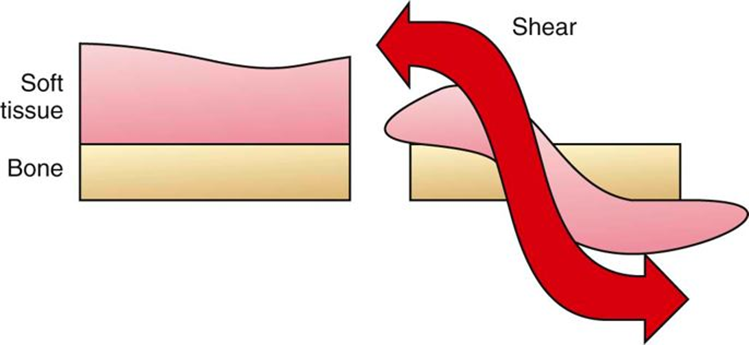
There are five mechanical forces. I have blogged on this before so check out past posts.  Mechanical forces are pretty universally understood and agreed upon so that really helps.  If you ask an engineer what a shear force is for example she or he will understand what you are talking about..

The five kinds of force that can affect body tissues are compression, tension, bending, shear, and torsion. Not all tissue is affected the same way by each type of force.  Eventually we will need to look at each of the five types of forces, the ways they produce important therapeutic benefits when applied by a skilled massage/bodywork practitioner and the different ways they can cause tissue harm.

Compression

Compressive forces occur when two structures are pressed together

Tension

Tension forces (also called tensile forces) occur when two ends of a structure are pulled in opposite directions. Tension force is used during massage with applications that drag, glide, lengthen, and stretch tissue to elongate connective tissues and lengthen short muscles

Bending

Bending forces are a combination of compression and tension. One side of a structure is exposed to compressive forces as the other side is exposed to tensile forces

Shear

Shear is a sliding force, and significant friction often is created between the structures that slide against each other.

Torsion

Torsion forces are best understood as twisting forces.


Now for the justification for professional training and core competencies. 

Mechanical forces are generic.  When I push down on a key on my computer keyboard I am generating a compressive force with my finger that will then cause something to occur.  The key moves down and a letter shows up on the screen. To be honest with you, I am not quite sure what happens as the key responds to the applied force.   I am also sure that there are a multitude of events that occur so that the letter ends up on the screen.  Now about the only thing that can be observed in this whole process is that compressive force is the mechanical force required to move the letter key down.  Then a whole bunch of unseen things happen and then the next observable thing is the appearance of the letter.  Yea! 

How effectively I apply the compressive force is huge consideration.  Right now I am using my finger. It fits the key.    I could use my elbow, my toes, my forehead or an implement or tool like a pencil and as long as I can get the correct letter to appear on the screen the outcome is appropriate.  The anatomy of my laptop makes it cumbersome to use my elbow or other body part but I have seen people that are able to use other parts of their body or a tool to create the compressive force to move the key.  So it is not so much how the compressive force is applied as long as the key moves down. 

I also have to apply compressive force to the correct key and in the right intensity.  If the application is too surface or light then the key does not move. Too much intensity and effort is wasted, I could hurt my finger or even break the computer.   I also need to make decision about what key I want to compress so the outcome is understood.  Some pretty odd messages can occur or unexpected results if the wrong letter is used or if auto correct takes over.

OK enough metaphor.   Hopefully you are starting to appreciate why massage /bodywork education needs to include an understanding of the anatomy, physiology and pathology, how tissue and related physiology responds to the mechanical forces and how each application needs to be modified to achieve an expected outcome without causing harm.

The hundreds of methods of massage /bodywork introduce one or a combination of the five types of mechanical force into the body to achieve a therapeutic benefit. The application is modified for safety and benefit by altering the   depth of pressure, drag, duration, speed, rhythm, direction, location and frequency.  The intended outcome should make sense by, at the very least, mimicking normal physiological function. For example, if you think the result is going to increase a joint’s range of motion than the application should at least have a chance of achieving that outcome.

The variety of massage and bodywork forms and styles in the profession can be clarified by describing intended outcome, what is done during the application, how it is adapted, mechanical forces, and mode of application.

I challenge you to describe a. particular method this way. For example: myofascial release, shiatsu, lymphatic drainage, Swedish, cupping, foam rolling and so forth.  Grief, there are hundreds to choose from.  Forget right now the names, creators and teachers, theory and physiology.  Just observe what is being done and what the end result was.  What mechanical forces are being created? How are the forces generated? How is the application modified and adapted?  Where and for how long are the methods applied?

Following are some helps so you can break down any massage bodywork system into it’s fundamental elements.

·         Depth of pressure (compressive force) can be light, moderate, deep, or variable.

 
·         Drag is the amount of pull (stretch) on the tissue (tensile force). In this context the term drag refers to the effort required to overcome resistance. Lots of drag-little slipping no slack. Lots of lubricant little drag.

·         Direction means that the massage may proceed from the center of the body outward (centrifugal) or from the extremities inward to the center of the body (centripetal). It can proceed from proximal to distal attachments of the muscle (or vice versa) following the muscle fibers, transverse to the tissue fibers, or in circular motions.

·         Speed of techniques can be fast, slow, or variable.

·         Rhythm refers to the regularity of application of the technique. A method that is applied at regular intervals is considered even, or rhythmic. A method that is disjointed, or irregular, is considered uneven, or nonrhythmic.

·         Frequency is the rate at which the method repeats itself within a given time frame .

·         Duration is the length of time the method is applied or that the technique remains in one location.

·         Location. When the application is being applied. Leg, abdomen, head etc. What structures are in the area.

·         Intended outcome.  What is supposed to happen and what happened.

Here are figures of the mechanical forces.